· David Cruz · Industry News · 5 min read
BACB 2026 RBT Changes Explained - Current as of May 2026
Updated May 1, 2026: the BACB's 2026 RBT changes are now in effect. Here is what changed for recertification, PDUs, supervision, training, and the RBT exam.

Key Takeaways
Updated May 1, 2026: the BACB’s 2026 RBT changes are now in effect. They took effect on January 1, 2026.
- Current RBTs recertifying in 2026 complete the RBT Recertification Competency Assessment for that 2026 recertification.
- After certifying or recertifying in 2026, RBTs move to a 2-year recertification cycle.
- The new maintenance requirement is 12 PDUs during that 2-year cycle.
- Applicants under the 2026 requirements need 40-hour training aligned with the 2026 requirements and the updated RBT exam content.
- RBTs are not independent practitioners. They practice under close, ongoing supervision.
Official BACB resources to check first:
- Guidance for Meeting RBT Requirements During the 2026 Transition
- RBT page on BACB.com
- RBT Test Content Outline (3rd ed.)
What’s Changed as of May 1, 2026
1. RBT recertification is moving to a 2-year cycle
RBTs who certify or recertify in 2026 receive a 2-year recertification window.
For current RBTs, the practical transition is:
- Complete your 2026 recertification with the RBT Recertification Competency Assessment.
- Your next recertification date is 2 years from your 2026 recertification date.
- During that 2-year cycle, complete 12 PDUs before your next recertification.
2. PDUs replace the old annual competency-assessment rhythm after the transition
The new maintenance requirement is 12 professional development units (PDUs) during each 2-year recertification cycle.
BACB guidance lists three PDU paths:
- In-service training through the organization where the RBT works
- ACE Provider professional development events
- Behavior-analytic university coursework
RBTs may start earning PDUs after they certify or recertify in 2026.
3. New applicants use the 2026 training and exam content
Applicants under the 2026 requirements need training aligned with the RBT 2026 40-Hour Training Requirements and Curriculum Outline.
The RBT exam is aligned with the RBT Test Content Outline (3rd ed.). The outline includes 43 tasks across six domains, including Data Collection and Graphing, Behavior Assessment, Behavior Acquisition, Behavior Reduction, Documentation and Reporting, and Ethics.
4. Supervision remains required
This is the part to keep clear: RBTs do not become independent clinicians under the 2026 changes.
RBTs still practice under close, ongoing supervision. BACB resources for 2026 list BCBA and BCaBA certificants as responsible individuals for supervising RBTs, and BACB public RBT materials also reference FL-CBA where applicable. If your supervision arrangement is changing, use the BACB resources and your employer’s compliance process rather than guessing from a blog post.
What This Means for Current RBTs
If you were already certified as of January 1, 2026, you do not retake the exam just because the exam outline changed.
Your next step depends on your BACB account and recertification date:
- If your 2026 recertification is still ahead, plan for the RBT Recertification Competency Assessment.
- After that 2026 recertification is approved, plan for 12 PDUs during your new 2-year cycle.
- Keep documentation for completed professional development in case you need it for recertification.
What This Means for Supervisors and Organizations
Supervisors and organizations should make the transition visible to RBTs:
- Confirm each RBT’s 2026 recertification date.
- Identify who is responsible for supervision under current BACB requirements.
- Plan in-service training or approved professional development early enough that RBTs are not trying to finish 12 PDUs at the deadline.
- Make documentation expectations clear.
What This Means for New RBT Applicants
If you are applying in 2026, use current BACB resources before choosing training.
Your training certificate should match the 2026 requirement language, and the exam content follows the RBT Test Content Outline (3rd ed.). If you completed training under older requirements but did not apply in time, check BACB guidance before assuming it still works.
Frequently Asked Questions
Are the 2026 RBT changes in effect now?
Yes. As of May 1, 2026, the 2026 RBT changes are in effect. The key date was January 1, 2026.
Do current RBTs need to retake the RBT exam?
No. Current RBTs do not retake the exam just because the 2026 exam outline changed. The updated exam content applies to people testing under the 2026 requirements.
When do I start earning PDUs?
After you certify or recertify in 2026. The new maintenance requirement is 12 PDUs during your 2-year recertification cycle.
Does the 2026 change make RBTs more independent?
No. RBTs remain paraprofessionals who practice under close, ongoing supervision. The 2026 changes affect training, examination, recertification, and professional development requirements; they do not make RBTs independent practitioners.
Can my employer provide PDU training?
Yes, BACB guidance includes in-service training through the organization where the RBT works as one PDU path. Check the BACB requirements for content and documentation details before relying on an event for recertification.
What This Means for Data Collection Practice
The PDU shift makes professional development more visible, but it does not change clinical scope. RBTs still collect data and implement assigned programs under supervision.
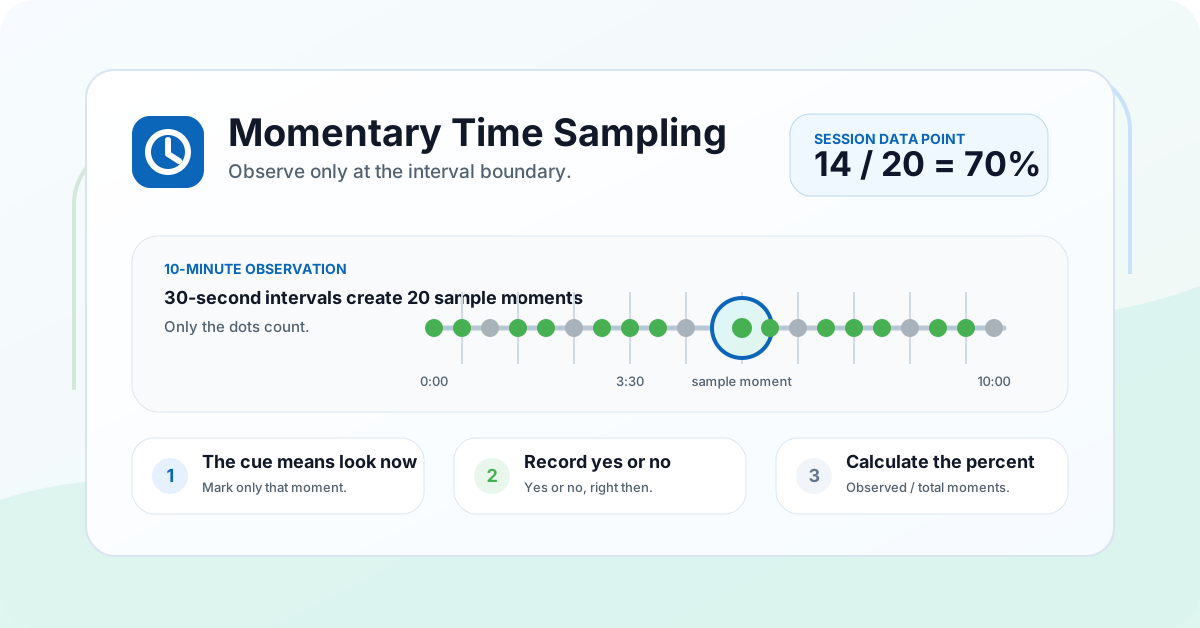
One practical professional-development area is data collection quality: recording methods like task analysis, ABC data, and interval recording are part of daily behavior-analytic service delivery.
TallyFlex supports standard ABA recording methods and is built for fast, in-session data collection. Use it for the programs and recording procedures your supervising clinician or team has assigned.
The Bottom Line
As of May 1, 2026, the BACB 2026 RBT transition is live. Current RBTs should follow their 2026 recertification instructions, then plan for 12 PDUs over the next 2-year cycle. New applicants should use current 2026 training and exam resources.
For official requirements, start with the BACB RBT page and your BACB account.